





The internet is a trove of quotes and statistics, leaving breadcrumb trails over time that can make it almost impossible to find the original source. For example, did you know that the famous statistic where 70% of businesses fail can’t actually be attributed to an original source?
So, next time you’re looking for a juicy statistic to throw into a pitch deck and support your point, ask yourself if it really represents the story as things are today.
At BrightLocal, we’re big on integrity. That’s why we’ve curated this list of up-to-date, verified local SEO statistics for 2025. Using much of our own local SEO research, as well as statistics sourced from other trustworthy publishers, you’ll find the most relevant local marketing stats below.
General Local Search Statistics
What percentage of online searches have local intent?
According to a Google official presenting at Secrets of Local Search in 2018, 46% of search queries have local intent (Search Engine Roundtable, 2018).
It’s difficult to find a more up-to-date statistic specifically on the intent of search engine queries, so we’ve supported this data with more recent search behavior statistics in the Consumer Search Behavior section.
- 80% of US consumers search online for local businesses on a weekly basis, and 32% search for them daily (SOCi Consumer Behavior Index, 2024).
- Close to half (46%) of consumers said they ‘always’ or ‘often’ add ‘near me’ to their local search queries. (Consumer Search Behavior, 2025).
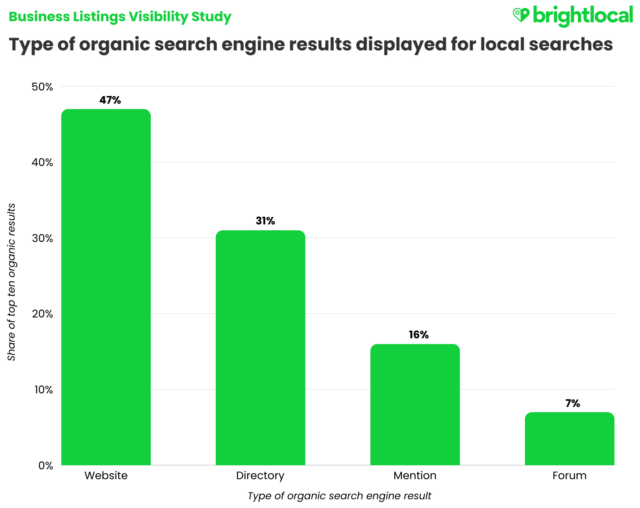
- Local search queries show the following types of results in Google’s first ten organic results:
- Business websites (47%)
- Directories (31%)
- Business mentions (16%)
- Forums and discussions (7%)
(Business Listings Visibility Study, 2024)
Google and Maps Statistics
- 61% of consumers use business information sites (like Google, Yelp, Tripadvisor, Better Business Bureau) to find information about a local business that is new to them or that they have not used before (Local Business Discovery and Trust Report, 2023).
- 72% of consumers use Google to search for local business information, but this drops to 61% for 18-24 year olds (SOCi Consumer Behavior Index, 2024).
- Consumers most trust Google (66%), Google Maps (45%), business websites (36%), Facebook (32%), and Yelp (32%) for local business information (Local Business Discovery and Trust Report, 2023).
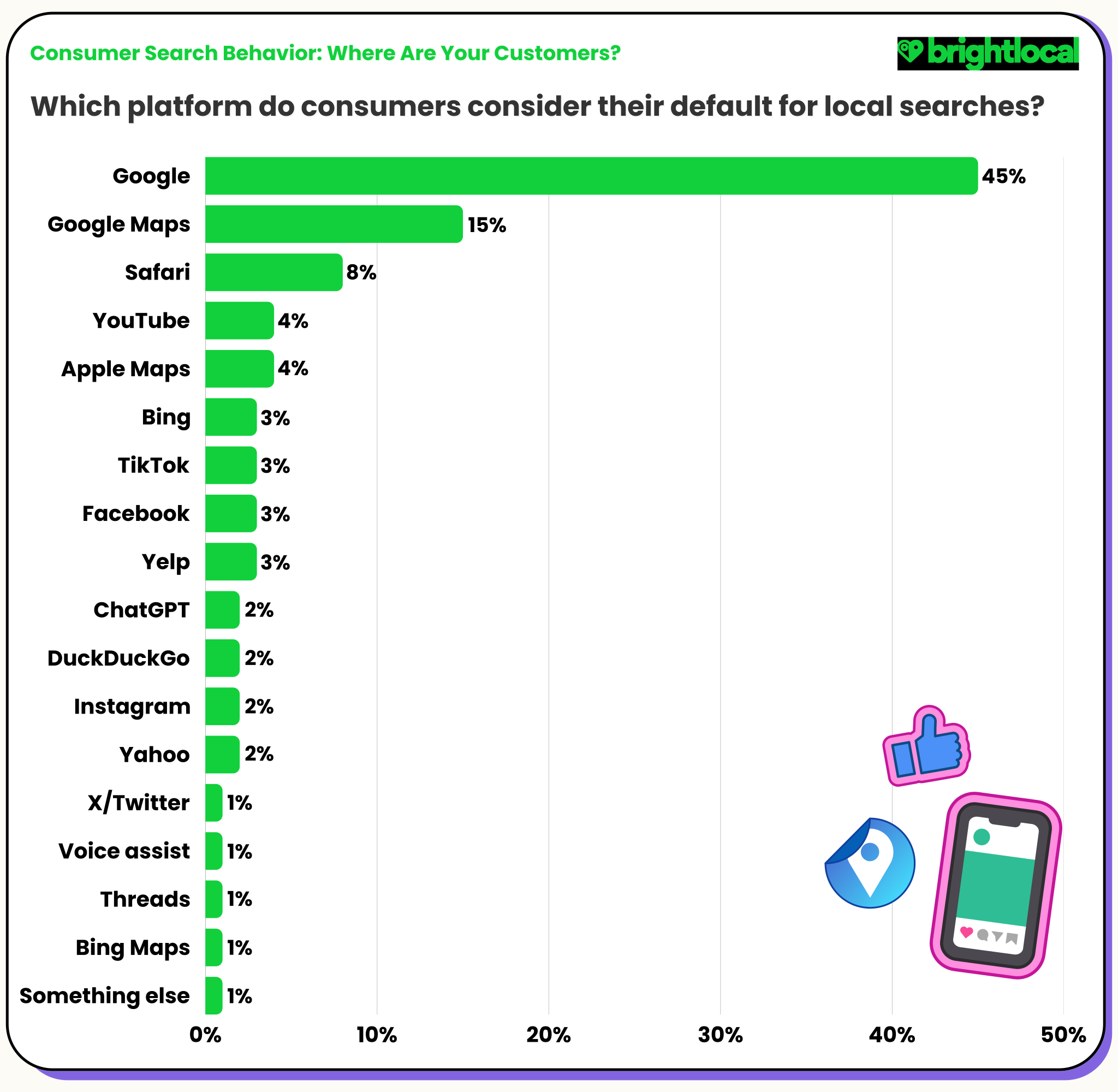
- 45% of consumers default to Google for local searches, 15% Google Maps, 8% Safari (Consumer Search Behavior, 2025).
- One in five consumers conduct local searches directly within maps (Google, Apple, and Bing) (Consumer Search Behavior, 2025).
- 42% of searchers click on Google map pack results for local queries (Backlinko, 2024).
Business Listing Accuracy Statistics
- 62% of consumers would avoid using a business if they found incorrect information online (Local Business Discovery and Trust Report, 2023).
- 47% of consumers would look for an alternative business nearby if the one they intended on visiting was closed (SOCi Consumer Behavior Index, 2024).
- Customers are 2.7 times more likely to consider a business reputable if they find a complete Business Profile on Google Search and Maps. (Google).
- Customers are 70% more likely to visit and 50% more likely to consider purchasing from businesses with a complete Business Profile. (Google).
- Only 68% of business contact information on ChatGPT and Perplexity matches details on Google Business Profiles. (SOCi Local Visibility Index, 2026).
- 21% of ChatGPT users switch to Google to verify information after making local searches. (Sagapixel, How Users Find & Choose Local Services Using ChatGPT).
Local SEO Ranking Factors
- Google Business Profile factors have the biggest impact on local pack rankings, while on-page factors have the strongest influence on local organic rankings. (Local Search Ranking Factors, 2025).
- According to experts, Local Pack rankings are most influenced by: 1) Primary GBP category, 2) Proximity of address to the searcher, 3) Keywords in the GBP business title (Local Search Ranking Factors, 2025).
- Local organic rankings are most influenced by: 1) Dedicated pages for each service, 2) Geographic keyword relevance of content, 3) Quality / authority of inbound links (Local Search Ranking Factors, 2025).
Learn more: Local SEO Ranking Factors
Local Business Review Statistics
- 97% of consumers read reviews for local businesses (Local Consumer Review Survey, 2026).
- 71% of consumers use Google to read local business reviews (Local Consumer Review Survey, 2026).
- 67% of consumers told us that they ‘often’ or ‘always’ go on to look at business reviews after conducting a local business search. (Consumer Search Behavior, 2025).
- 37% of US consumers use Instagram to find local business reviews, and 29% use TikTok as alternative local business review platforms (Local Consumer Review Survey, 2026).
- 54% of consumers visit a business’s website after reading positive reviews. (Local Consumer Review Survey, 2026).
- Recommended local businesses have an average of 4.3 stars on ChatGPT, 4.1 on Perplexity, and 3.9 on Gemini. (SOCi Local Visibility Index, 2026).
Local SEO Industry and Local Businesses Data
- 94% of high-performing brands have a dedicated local marketing strategy, compared to 60% of average-performing brands (Brand Beacon Report, 2024).
- 86% of local marketers say their clients are aware of how new developments in search could impact their business visibility and rankings (Local Marketing Industry Survey, 2024).
- Marketers believe the most valuable local SEO services are 1) Google Business Profile management (76%), 2) Content creation (53%), 3) Citation building/cleanup (43%) (Local Marketing Industry Survey, 2024).
- Despite 89% of SMBs saying they invest in organic SEO, only 40% of them say they have a dedicated business website. (SMB Marketing Report, 2025).
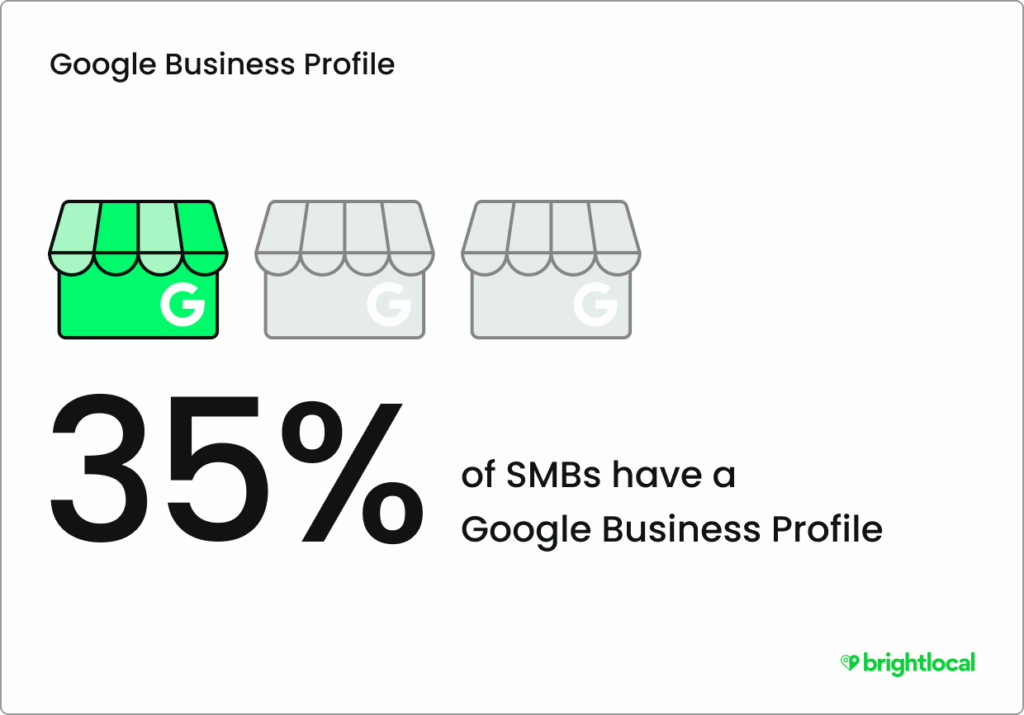
- Just 35% of SMBs have a Google Business Profile (SMB Marketing Report, 2025).
AI Local Search Statistics
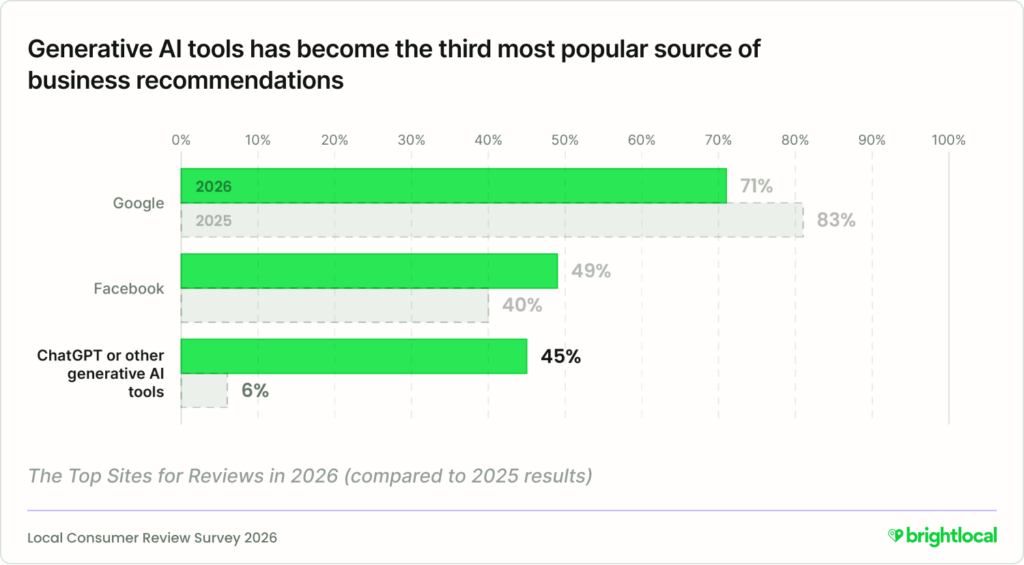
- 45% of consumers use ChatGPT or other generative AI tools for local business recommendations (Local Consumer Review Survey, 2026).
- Visibility in local recommendations by ChatGPT are 30x harder to achieve than ranking in Google’s local search results (SOCi Local Visibility Index, 2026).
- Less than half of businesses that lead in Google local search results also appear in AI local recommendations (SOCi Local Visibility Index, 2026).
- ChatGPT Search shows business websites for 58% of its local search sources, followed by business mentions (27%) and online directories (15%) (Uncovering ChatGPT Search Sources, 2024).
- According to experts, local AI search visibility factors are most influenced by 1) Presence on expert-curated ‘Best Of’ lists, 2) Dedicated pages for each service, 3) Prominence on key industry-relevant domains (Local Search Ranking Factors, 2025).
- 75% of ChatGPT users use keywords instead of natural language when looking for local services (Sagapixel, How Users Find & Choose Local Services Using ChatGPT).
- ChatGPT users look at an average of 3.7 local businesses from results. Only 27% looked at just one business (Sagapixel, How Users Find & Choose Local Services Using ChatGPT).
- When looking for local businesses 39% of ChatGPT users click to visit a business website. (Sagapixel, How Users Find & Choose Local Services Using ChatGPT).
We hope this list of local SEO statistics gives the facts you need to kickstart your local marketing strategy for 2026. Think we’ve missed any crucial figures or noticed any statistics that need an update? Let us know!